
Designing for Professional Readiness: Transforming a Social Work MA Programme
Overview
As part of a multi-disciplinary team, I contributed to the redesign, development and launch of Frontline's blended-learning Social Work MA programme.
The programme represented a significant organisational transformation, moving from a primarily face-to-face model towards a more professional, scalable blended learning experience. Alongside this shift, the programme underwent a wider refresh, including a new qualification pathway, updated curriculum and refreshed learner experience.
My focus was the Readiness for Practice (RfP) element of the programme, a high-stakes component designed to prepare learners for professional social work practice.
The Challenge
The programme needed to support large learner cohorts while maintaining quality, consistency and accessibility.
At the same time, learners were preparing to enter professional practice, meaning the learning experience needed to balance academic rigour with practical application and professional readiness.
A key challenge was translating specialist knowledge from social work experts into engaging digital learning experiences that would prepare learners for success in practice.
My Role
Working closely with curriculum teams and subject matter experts, I contributed to the design, development and quality assurance of blended learning experiences across the programme.
Responsibilities included:
Learning design and curriculum discussions using the ADDIE framework
Translating SME expertise into digital learning experiences
Designing asynchronous learning modules and e-learning content
Developing multimedia learning assets, including videos, audio content and interactive resources
Building learning experiences using Moodle and Articulate
Quality assurance and accessibility reviews
Supporting programme launch and implementation
My Approach
Rather than simply transferring face-to-face content into an online format, the focus was on designing learning experiences that worked effectively within a blended environment.
This involved:
Collaborating closely with social work experts
Structuring content into manageable learning journeys
Designing interactive learning activities
Embedding multimedia resources to support different learning preferences
Applying accessibility principles throughout the design process
Ensuring consistency across modules and learner experiences
A key aspect of the role involved acting as a bridge between subject matter expertise and learner needs, translating complex professional knowledge into engaging and accessible learning experiences.
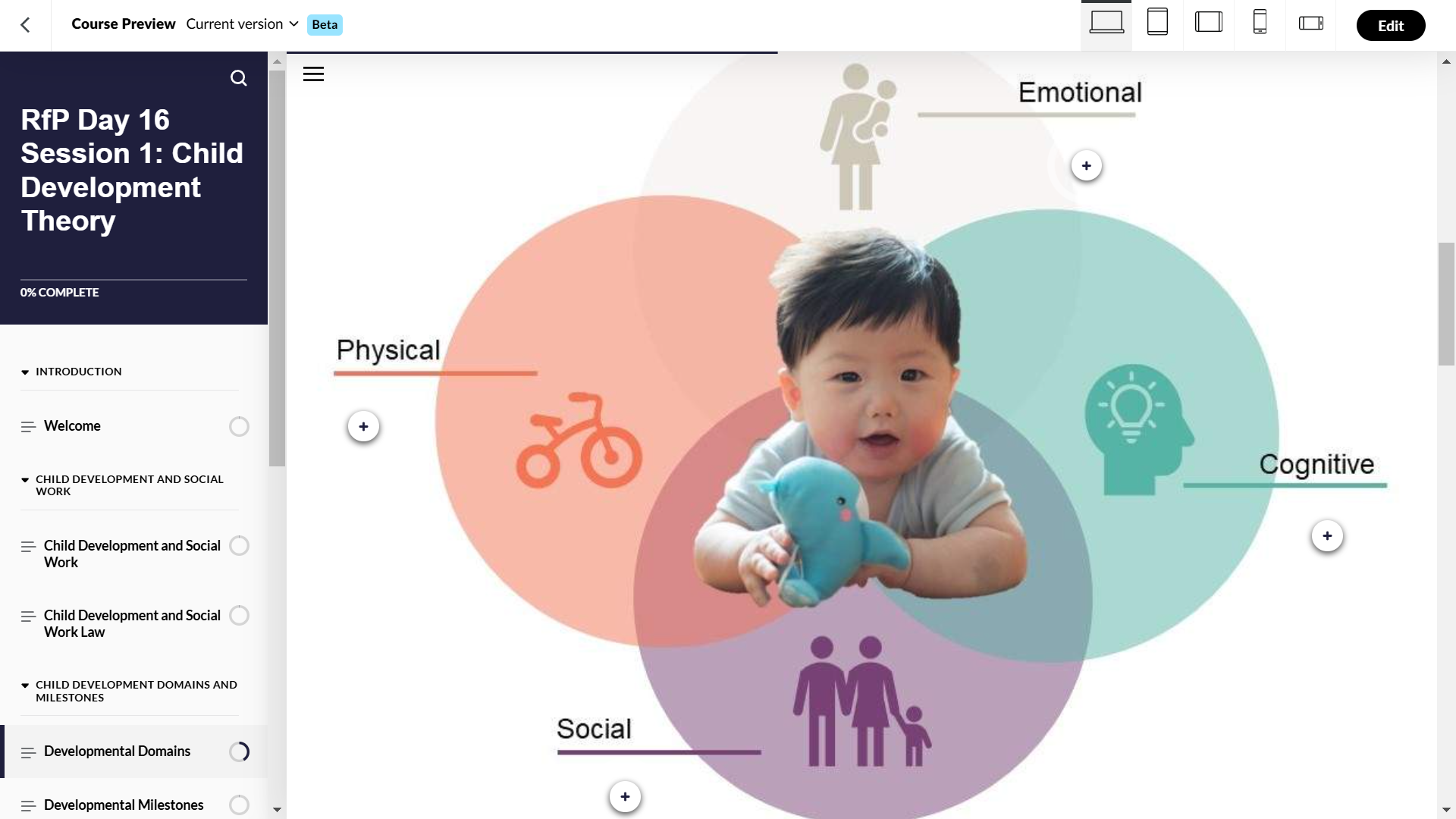
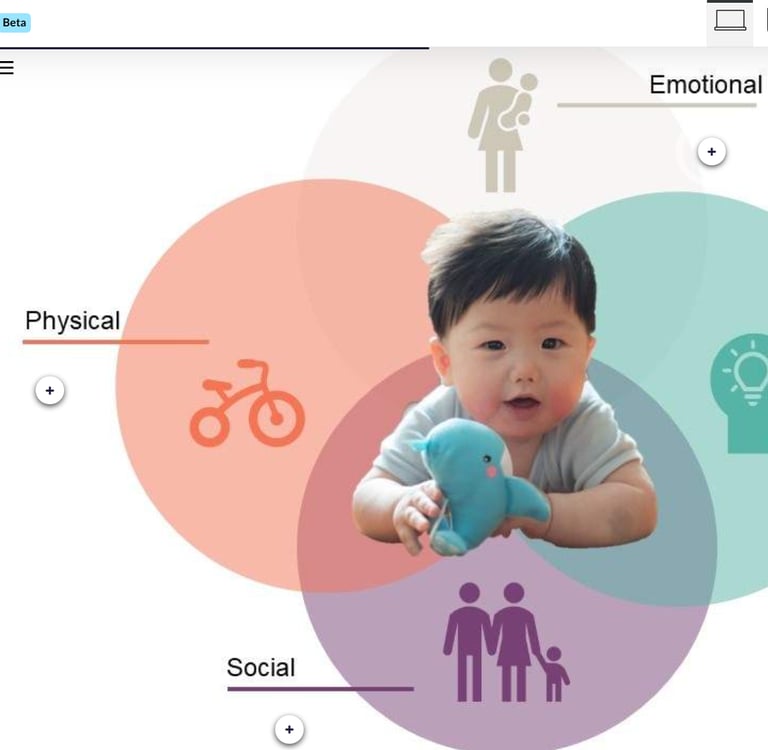
Example of a Readiness for Practice module designed to support navigation, scaffold complex concepts and prepare learners for professional practice.
Designing for Understanding
Key Design Decisions
A significant part of the project involved bridging the gap between subject matter expertise and learner experience.
While subject matter experts brought deep professional knowledge, my role was to ensure that knowledge could be effectively understood, navigated and applied by learners.
Working collaboratively with SMEs, I helped shape decisions around:
Module structure and flow
Content organisation and navigation
Placement and design of assessments
Learning journey design
Scaffolding and pre-teaching of complex concepts
Multimedia integration
Accessibility and learner engagement
This often involved helping teams move beyond a content-centred perspective and consider the learner's experience of the programme.
Together, we explored questions such as:
What does the learner need to understand before encountering this concept?
Where might learners become overwhelmed or confused?
How can we make complex information more accessible without reducing academic rigour?
What support or scaffolding might help learners succeed?
The goal was not to simplify the content, but to design learning experiences that enabled learners to engage with complex ideas more effectively.
Human Insight
This project reinforced that professional readiness is about more than knowledge acquisition.
Learners also need confidence, clarity and a sense of capability.
Working on the Readiness for Practice programme reminded me that some learners who have the potential to become exceptional practitioners can still struggle if learning experiences are difficult to navigate or access.
Effective learning design is not about making content easier. It is about creating the conditions for learners to engage with complexity, build confidence and demonstrate what they are capable of.
When we design with learner experience in mind, we increase the likelihood that talented people are able to thrive rather than being left behind by the learning process itself.
You may also be interested in the following projects:
© 2026 Florence Ukpabi. All rights reserved.